



Moving in the workplace means building short movement moments into your day instead of sitting for hours on end. Small habits add up: standing meetings, walking briefly every half hour or working with a treadmill under your desk keep your body in motion all day. You don't need a gym or an extra hour for it, just a few conscious choices.
Why more movement at work is important
More movement at work is important because we spend a large part of our day sitting. The Dutch sit on average more than nine hours a day, and a substantial part of that is during work. Frequent and prolonged sitting is associated with a higher health risk, even if you otherwise live healthily.
Movement during the workday can contribute to more energy and better concentration. In practice, you notice that a short walk keeps your head fresh between two tasks and that you're less likely to slump after lunch. Your mood often benefits from moving briefly as well, which on a busy workday is just as valuable as the physical gains.
For employers, it also matters that more active employees often feel fitter and work with more pleasure. Our experience with treadmills in the office teaches us that people get moving faster when the threshold is small and the device is within reach.
How much should you move at work?
How much you should move at work aligns with the national exercise guidelines of the Health Council. For adults: at least 150 minutes per week of moderately intensive exercise, such as brisk walking or cycling, spread over multiple days. In addition, the advice is to strengthen your muscles and bones at least twice a week and to avoid a lot of sitting.
Moderately intensive means you breathe slightly faster but can still hold a conversation. Brisk walking, taking the stairs or cycling to work all count. This way you build up part of those 150 minutes during your regular workday, without setting aside separate time for it.
Those 150 minutes sound like a lot, but spread over a working week it's about half an hour of walking on five days. In 2025, only 47 percent of the Dutch met the standard.
Important to know: regular exercise doesn't simply undo the disadvantages of a whole day of sitting. Therefore, alternate sitting, standing and moving as often as possible and preferably stand up every half hour. It's precisely those interruptions that make the difference at work.
Tips to move more at work
With a few simple tips you immediately bring more movement into your workday, without it costing you much time or effort. The habits below work both at the office and at home and are easy to maintain.
- Stand up every half hour and walk a small round through the room.
- Meet standing or turn a discussion into a walking conversation.
- Take the stairs instead of the elevator.
- Deliberately place the printer, trash can or your water bottle a bit further away.
- Walk over to a colleague instead of emailing or chatting.
- Turn your lunch break into a short walk outside.
- Do a few stretching exercises at your desk in between.
It's mainly about regularity, not about sweating. Short interruptions of a few minutes, spread over the day, often do more for your health than one long exercise session after which you sit still for hours again.
Choose two to start with and link them to something you already do, like a coffee moment. That way, moving at work naturally becomes a habit instead of an extra task on your list.
Moving while working from home
Moving while working from home requires a bit more attention, because your commute and walking around the office disappear. Without those natural movement moments, you quickly sit still even longer at home than at the office.
Therefore, schedule fixed walking blocks in your calendar and take your phone meetings while walking, even if it's just a round through the street. A simple routine helps: start your day with a short walk instead of the ride to the office, stand up at every coffee moment and step outside during your lunch break.
Also alternate your workplace between sitting and standing, so your body doesn't stay in the same position all day. Turn off your camera during an online meeting where possible, and walk around in the meantime. That way you combine meeting and movement in one go.
More movement at the office with the right tools
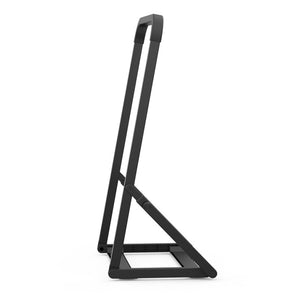
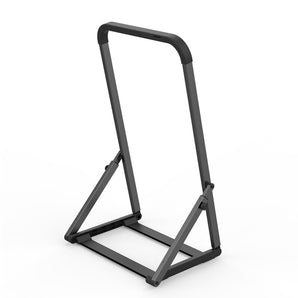
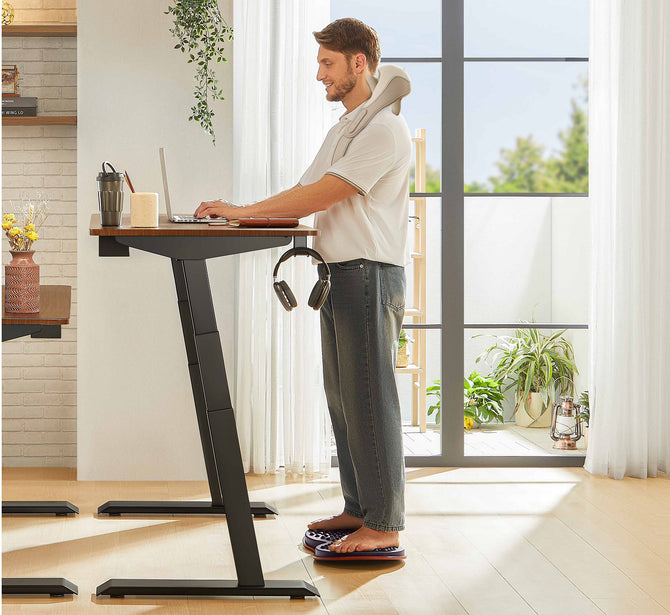
More movement at the office is easier with a few practical tools that fit a workday. With a sit-stand desk you easily alternate between sitting and standing work, and with a desk bike like the WalkingPad W1B Office Bike you stay in motion while continuing to work.
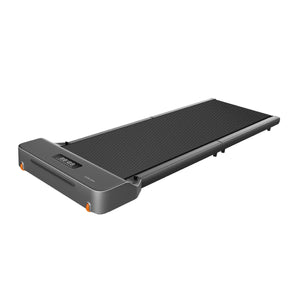
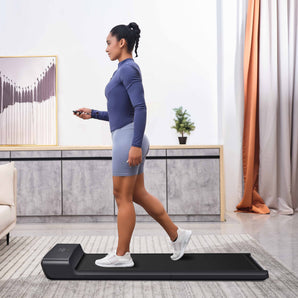
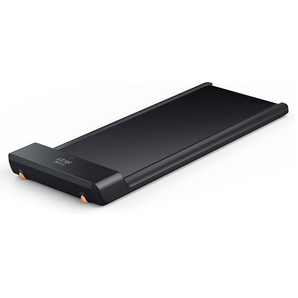
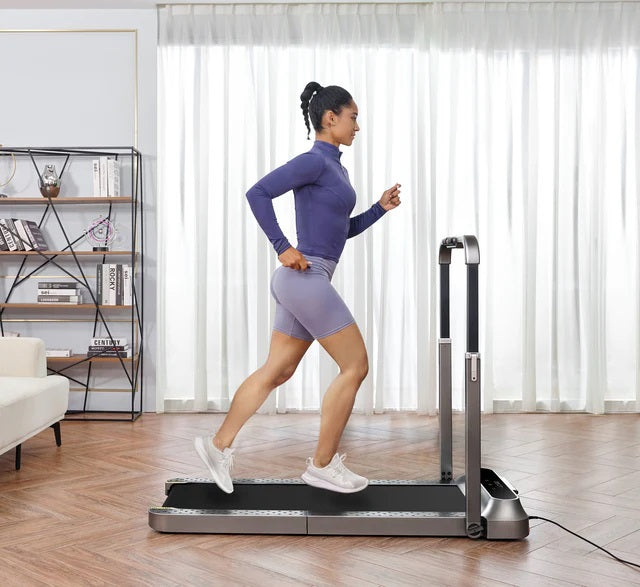
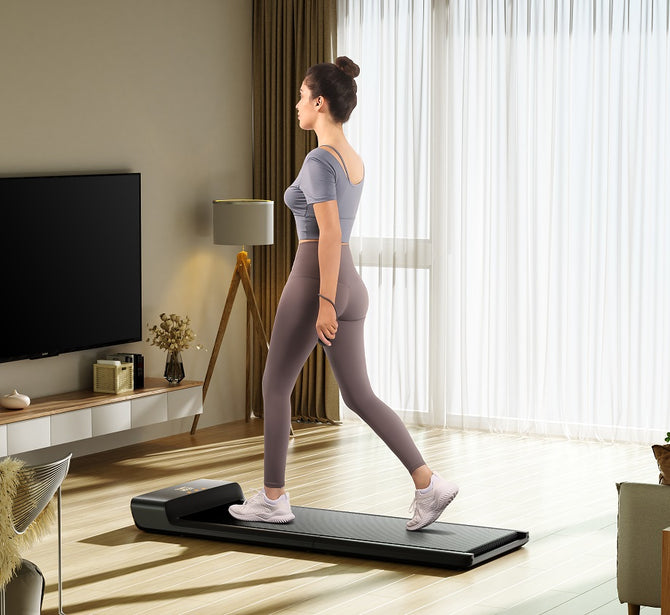
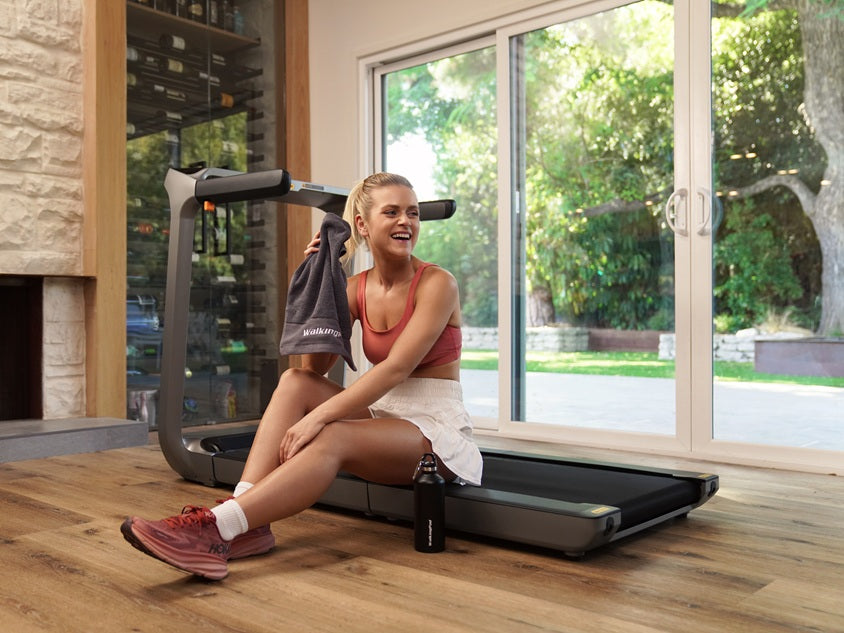
If you really want to make steps during work, a treadmill under your desk is a nice option. A calm walking pad goes up to 6 km per hour and has a quiet motor of maximum 65 dB(A), comparable to a normal conversation, so your colleagues or your video call hardly notice it.
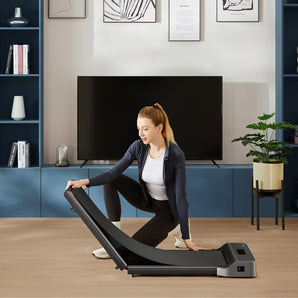
Our foldable treadmills take up little space when folded and save up to 90 percent of space, convenient in a small office or at a home workspace. This way you keep your steps up while simply doing your work. Combine such a tool with the tips above, and you reach the exercise guideline without turning your day upside down.
Getting started with moving at work
Getting started with moving at work begins with one small habit you can maintain starting today. Just stand up during your next meeting, or schedule your first walking block in your calendar. Every step counts, and after a few days it already feels natural.
If you want to structurally build movement into your workday, a compact treadmill for home helps you walk while you work. View our models and see which one fits your workplace best.