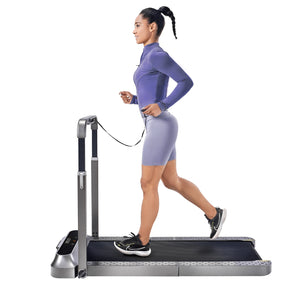




Running on a treadmill is the way to train consistently, even when it's raining, windy or dark outside. You determine your own pace, your training duration and your intensity, so you can work specifically on building fitness, fat burning and achieving concrete goals.
The great thing is that you can monitor everything: from speed and distance to heart rate zone and calorie burn. This way you see immediate results and stay motivated.
In this article you'll discover what to pay attention to when running on a treadmill, how you build up safely, which schedules you can follow and how you keep training fun, so you actually keep it up.
Why run on a treadmill?
Running on a treadmill is comfortable and efficient, because you train in a controlled environment. You don't have to deal with traffic lights, intersections or unexpected surfaces, and you can fully focus on your pace, your breathing and your running technique.
That makes it ideal when you want to train specifically for a certain goal, such as improving your endurance or working in specific heart rate zones.
It's also an effective choice when you want to stay consistent, regardless of the weather or your schedule. Just half an hour of indoor fitness before or after work is often easier to maintain than constantly planning an outdoor session.
In addition, the treadmill is adjustable: you set speed, incline angle and training duration exactly to your level. This way you can train variably with duration, pace or intervals, and build your fitness step by step.
The right progression: from walking to running on the treadmill
If you're (re)starting running, a gradual progression works best. Start with vigorous walking so your body gets used to the repetition and your joints, tendons and muscles get time to become stronger. Then you add short jogging sections. Think of a comfortable pace where you can still talk in short sentences. This way you train accessible, but effectively.
Make it concrete by working with blocks. For example, you alternate walking and calm running, and extend your running blocks each week while your walking breaks become shorter. Keep your training consistent and give yourself space to recover. Rest days aren't lost days, they're part of injury prevention and help you progress in the long term.
During progression, pay attention to your pace, your posture and your breathing. Too high a speed seems motivating, but often leads to too rapid strain. Rather choose an adaptable program where you monitor your progress via distance, training duration and how your body feels afterwards.
Running schedules for the treadmill
The right running schedule depends on your level and your goal. If you're a beginning athlete, you build up calmly to improve your fitness without overload, while an advanced schedule more often contains more pace and intensity.
Especially choose a schedule you can maintain 3 times a week and track your progress via pace, distance and training duration.
Schedule 1: Beginner schedule towards 5 km (build-up in weeks)
| Week | Training 1 | Training 2 | Training 3 |
|---|---|---|---|
| 1 | 5 min walking, 8x (1 min jogging, 1.5 min walking), 5 min walking | 5 min walking, 6x (1 min jogging, 2 min walking), 5 min walking | 20 min vigorous walking, finish with 3x 30 sec calm jogging |
| 2 | 5 min walking, 8x (1.5 min jogging, 1.5 min walking), 5 min walking | 5 min walking, 6x (2 min jogging, 2 min walking), 5 min walking | 5 min walking, 10 min calm jogging, 5 min walking |
| 3 | 5 min walking, 6x (3 min jogging, 2 min walking), 5 min walking | 5 min walking, 4x (4 min jogging, 2 min walking), 5 min walking | 5 min walking, 15 min calm jogging, 5 min walking |
| 4 | 5 min walking, 3x (6 min jogging, 2 min walking), 5 min walking | 5 min walking, 2x (8 min jogging, 2 min walking), 5 min walking | 5 min walking, 20 min calm running, 5 min walking |
| 5 | 5 min walking, 10 min running, 2 min walking, 10 min running, 5 min walking | 5 min walking, 25 min calm running, 5 min walking | 5 min walking, 30 min calm running, 5 min walking |
| 6 | 5 min walking, 10 min running, 2 min walking, 12 min running, 5 min walking | 5 min walking, 35 min calm running, 5 min walking | Test: 5 km at comfortable pace, take rest days around this session |
Tip: train 3x per week and plan at least 1 rest day between trainings. If a week feels too heavy, repeat that week once more before building further.
Schedule 2: Slightly advanced (completing and improving 5 km)
| Week | Training 1 | Training 2 | Training 3 |
|---|---|---|---|
| 1 | 5 min warm-up, 20 min calm running, 5 min cool-down | 5 min warm-up, 3x (6 min tempo, 2 min calm), 5 min cool-down | 30 min calm running, focus on even pace |
| 2 | 5 min warm-up, 25 min calm running, 5 min cool-down | 5 min warm-up, 4x (5 min tempo, 2 min calm), 5 min cool-down | 35 min calm running |
| 3 | 5 min warm-up, 30 min calm running, 5 min cool-down | 5 min warm-up, 6x (2 min faster, 2 min calm), 5 min cool-down | 40 min calm running |
| 4 | 5 min warm-up, 35 min calm running, 5 min cool-down | 5 min warm-up, 3x (8 min tempo, 2 min calm), 5 min cool-down | 5 km continuous at comfortable pace, try to run evenly |
Tip: choose your tempo blocks at an intensive, but controllable level. You don't need to sprint to make progress, efficient training works especially through repetition and consistency.
Schedule 3: Interval/HIIT (fitness and fat burning)
| Level | Workout | Total duration | Goal |
|---|---|---|---|
| Beginner | 5 min warm-up, 8x (30 sec fast, 90 sec calm), 5 min cool-down | 24 min | Stimulate fitness, build fat burning |
| Average | 5 min warm-up, 10x (45 sec fast, 75 sec calm), 5 min cool-down | 30 min | Increase heart rate, increase calorie burn |
| Advanced | 8 min warm-up, 12x (60 sec fast, 60 sec calm), 6 min cool-down | 38 min | HIIT stimulus, improve pace and endurance |
Tip: do interval training maximum 1 to 2 times per week and combine with calm endurance training. Take rest days so your muscles, tendons and Achilles tendon can recover.
Air resistance and incline when running on the treadmill
A much-discussed difference between outdoor running and running on a treadmill is air resistance, and this is immediately one of the most important differences between running on a treadmill and running outside.
Outside you sometimes have to run against wind and that costs extra energy. On a treadmill there's hardly any air resistance, which can make the same pace on the treadmill feel somewhat easier than when you run outside.
That's why many runners choose to set a small incline angle, often around 1 percent, so you better simulate the outdoor situation and your training becomes more comparable.
Incline is also a smart way to train variably without having to go extremely hard. With a light incline you increase intensity and stimulate fat burning, while you can keep speed relatively comfortable.
Moreover, you train your running muscles in a different way, which helps with strength and stability. Build up the incline angle calmly and use it especially as extra stimulus, not as replacement for all trainings.
Why is your heart rate higher when running on a treadmill?
That your heart rate on the treadmill sometimes turns out higher can have multiple causes. Inside it's often warmer and there's less ventilation, which means your body has to work harder to cool down. You sweat faster and your heart rate rises to regulate your temperature.
Also, the constant movement of the running surface can ensure you have less natural variation in stride length and pace, which gives a different load than outside. In addition, many runners unconsciously adjust their running style on the belt: you often make shorter strides with a higher stride frequency, so you stay stable on the running surface. That requires just a bit more muscle activity and control, which can make your heart rate turn out higher.
Some athletes also experience the treadmill as heavier because you have less distraction and your effort feels more constant. Therefore train on feeling and on data: pay attention to your breathing and heart rate and adjust your pace or incline if you're too high for your training.
How to prevent injuries while running on the treadmill
Running on a treadmill is a nice way to train controlled, but precisely because your pace and surface are so constant, it's important to build up smartly. With the tips below you reduce the chance of overload and keep training with pleasure, whether you're working on your fitness, want to achieve 5 km or do interval training.
- Build up calmly: increase your speed, distance and training duration step by step, so your muscles, tendons and joints can get used to the load.
- Don't go too hard too fast: if you feel fit, it's tempting to immediately run harder or continue longer, but too rapid build-up is one of the biggest causes of running injuries.
- Plan sufficient rest days: recovery is essential to become stronger, preferably train 3 times per week and take at least 1 rest day between your running trainings.
- Wear good running shoes: even on a treadmill you need cushioning and support, shoes that fit your running style help to better relieve your feet and knees.
- Listen to signals of overload: if you have nagging pain, stiffness or persistent fatigue, take it easier and possibly temporarily choose walking or a calmer endurance training.
- Alternate duration and intervals: combine calm endurance training with occasional intervals or tempo, this way you train more effectively and prevent your body from always getting exactly the same stimulus.
Nuance with complaints: with some injuries the treadmill can be precisely pleasant due to the controlled, even surface. At the same time it can sometimes feel more sensitive with calf and Achilles tendon, especially if you run long at the same pace or add intensity too quickly. In that case build up extra calmly and more often choose shorter blocks with recovery moments.
Practical tips for more motivation on the treadmill
Motivation is often the difference between training occasionally and really making progress. Make it easy for yourself by linking your training to fixed moments and by keeping your sessions interesting with variation. If you also monitor your progress, running on the treadmill becomes much more motivating, because you directly see what you're building in fitness, pace and distance.
- Plan fixed training moments: put your sessions in your calendar as if it's an appointment, this way consistent training becomes a habit.
- Set goals: choose a concrete goal such as achieving 5 km, maintaining a certain training duration or becoming faster at a comfortable pace, that gives direction to your program.
- Track progress: note speed, distance, training duration and possibly your heart rate zone, so you see how your fitness improves and your progress becomes measurable.
- Reward after a good week: link a small reward to three completed trainings, think of new socks, a nice smoothie or a rest moment you actually take.
- Variation in trainings: alternate duration, pace and intervals, this way it stays challenging and you prevent your body from getting used to one stimulus.
- Entertainment: make a fixed playlist, listen to a podcast or watch a series during calm sessions, this way time flies and training feels accessible.
- Running music and rhythm: choose music with a BPM that fits your stride frequency, a stable rhythm helps you run consistently and maintain your pace better.
Ready to start running on a treadmill?
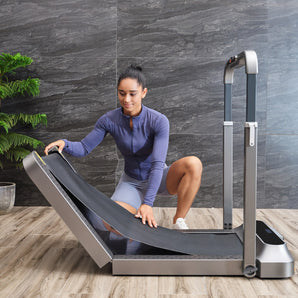
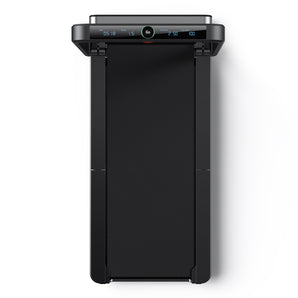
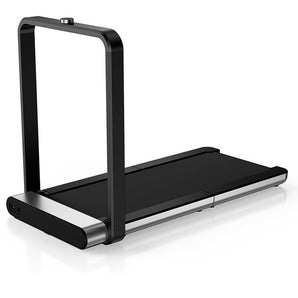
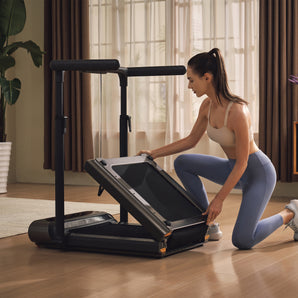
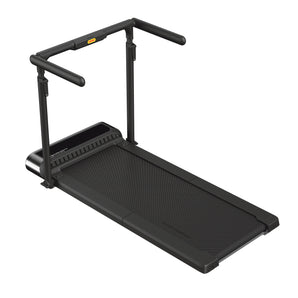
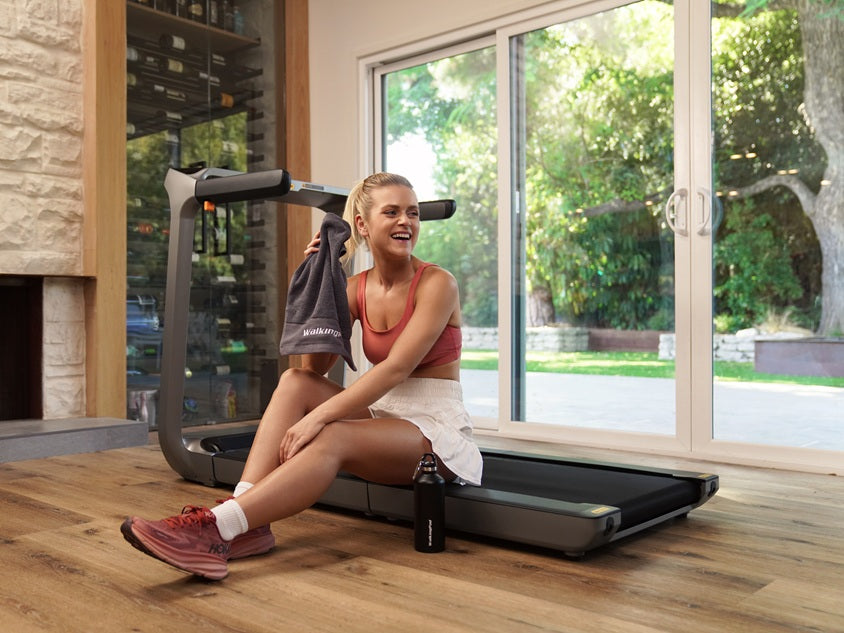
Do you want to run more often without being dependent on the weather or your schedule? With a treadmill from WalkingPad you train when it suits you. Our innovative, foldable treadmills take up little space and are ideal for use at home or in the office. This way you make movement easier, maintain it longer and work step by step on a fitter body.
View WalkingPad's treadmills and choose the model that fits your pace, space and goals.