



Do you want to offer company fitness to your team as an employer? Via the work-related costs scheme (WKR) that can be fiscally attractive, and in some cases even completely untaxed. Below you'll read which three fiscal variants exist, how the cafeteria model works and why a treadmill in the office is one of the smartest options. Not yet familiar with the basics of the WKR? Then first read our article about the work-related costs scheme.
How does company fitness work via the WKR?
Company fitness isn't just one thing within the work-related costs scheme. The fiscal treatment depends entirely on how and where you offer it. The Tax Authority distinguishes between three variants, and the difference is large: with one variant you pay zero tax, with the other the final levy can increase considerably. Below we walk through the three variants.
Company fitness in the workplace (nil valuation)
The fiscally most advantageous option is company fitness in the workplace. If you make a fitness facility available in an establishment of your organization, the Tax Authority values this at nil. That sounds abstract, but it comes down to the facility being valued at zero euros. Nothing comes off your discretionary scope and you pay no final levy. Completely untaxed therefore. In the Payroll Tax Manual of the Tax Authority you'll find the complete overview of facilities for which a nil valuation applies.
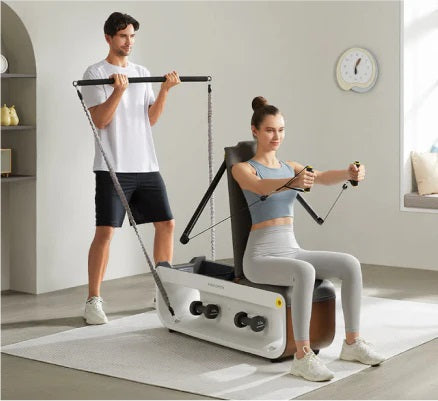
By "workplace" the Tax Authority means any location for which you as employer are responsible on the basis of the Working Conditions Act. That can be an office, a production hall, a meeting room or even a hallway. Do you place a treadmill, a fitness bike or some dumbbells there? Then that falls under the nil valuation. You don't have to conclude a contract with a fitness center and you don't have to track it per employee. The facility is there, employees may use it, done.
There is an important difference between providing and reimbursing. A fitness room or device that you place in the workplace is a provision and falls under the nil valuation. But a monetary amount you give to employees to arrange fitness in the workplace themselves is an allowance and is in principle taxed, unless you include it in the discretionary scope. Do you work with a team that works (partly) from home? The home workplace generally doesn't fall under the definition of "workplace" in the Working Conditions Act, which means the nil valuation doesn't apply there. For home workers you can include an allowance for fitness equipment in the discretionary scope or have it run via the cafeteria model.
Company fitness outside the workplace (discretionary scope)
Do you reimburse a sports subscription at an external gym, fitness center or sports app? Then that's basically just taxed wages. However, you can designate it as final levy wages and include it in the discretionary scope of the WKR. As long as your total designated allowances and provisions remain within the discretionary scope, you pay no extra tax on it.
In practice many employers combine this with a cafeteria arrangement (see the next section). The employee then exchanges a piece of gross salary for an untaxed fitness subscription. That yields advantage for both parties: the employee pays less for the subscription and you as employer pay less social employer contributions on the reduced gross salary.
Keep in mind that the full subscription costs (including VAT) count towards the discretionary scope. With an organization with multiple employees who exercise, this can add up considerably. You can reduce the claim on the discretionary scope by having employees pay their own contribution from their net salary. Note: a deduction on the gross salary doesn't reduce the claim on the discretionary scope.
Workplace-related company fitness (targeted exemption)
The third variant is workplace-related fitness. This option is less known, but fiscally interesting for specific situations. Workplace-related fitness is intended to reduce health risks that are directly related to the performance of work. This especially applies to functions where physical fitness is necessary, such as with firefighters, security guards or employees in physically heavy professions.
Workplace-related fitness is targeted exempt. That means it doesn't come at the expense of the discretionary scope, regardless of whether the fitness takes place in the workplace or outside it. You can even give employees an allowance for an external fitness program without this affecting your discretionary scope. The conditions are strict though: there must be a concrete fitness program that's part of the Health & Safety plan of your organization, and the fitness must be demonstrably necessary for the performance of the function. For most office jobs this variant is therefore difficult to apply. Do you doubt whether this applies to your situation? Discuss it with a tax specialist.
The cafeteria model: how gross/net exchange works
The cafeteria model is the most commonly used way to make company fitness outside the workplace fiscally attractive. It works as follows: your employee "exchanges" part of the gross salary for an untaxed fitness subscription. Because the subscription is paid from the gross salary (on which normally wage tax and premiums are withheld), the employee saves the tax percentage that would normally be levied on that part of the salary. In practice that can amount to a discount of about 40% on the sports subscription.
As employer you also benefit. By reducing the gross salary, your social employer contributions decrease. After all, you pay premiums on a lower wage amount. You designate the costs of the subscription as final levy wages and include it in the discretionary scope of the WKR.
Besides the complete gross/net exchange there are two more variants. You can also choose an employer contribution, where you as employer reimburse part of the subscription. A third option is to combine both: an employer contribution plus a gross/net exchange of the remaining amount. With that last variant the total discount for the employee can increase to 50% or more, while you as employer consume less discretionary scope than with a complete exchange. Which variant is most advantageous depends on your wage sum, your available discretionary scope and the policy you want to pursue. A payroll advisor can help you determine the optimal model for your organization.
Arranging company fitness in 5 steps
Setting up a company fitness arrangement doesn't have to be complicated. With the following five steps you have it arranged structurally.
- Inventory your possibilities: how much discretionary scope do you still have available? Is there space in the office for a fitness facility, or do you choose external sports subscriptions? Discuss this with your payroll administrator or tax specialist, so you know which variant fits best.
- Determine the implementation: do you choose fitness equipment in the workplace (nil valuation, completely untaxed), for an allowance of external subscriptions via the cafeteria model, or for a combination? Record your choice in policy, so it's clear for everyone.
- Process it in payroll administration: designate the allowance or provision as final levy wages. This must happen at the moment of provision or reimbursement, not afterwards. Include the costs in your calculation of the discretionary scope.
- Communicate to your employees: let them know which fitness options exist, how they can register and what it concretely yields them. A short calculation of the net benefit can help increase participation.
- Track the discretionary scope: the discretionary scope expires at the end of the calendar year and you can't carry it forward. Adjust timely if the scope threatens to fill up, for example by focusing more on workplace facilities that fall under the nil valuation.
A treadmill in the office as company fitness
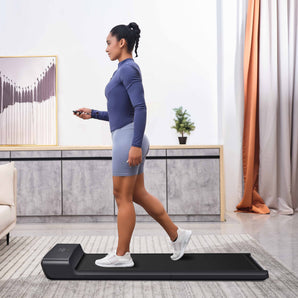
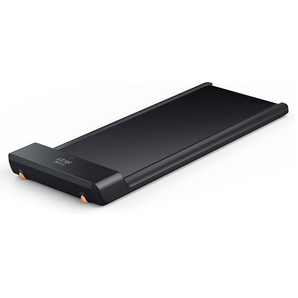
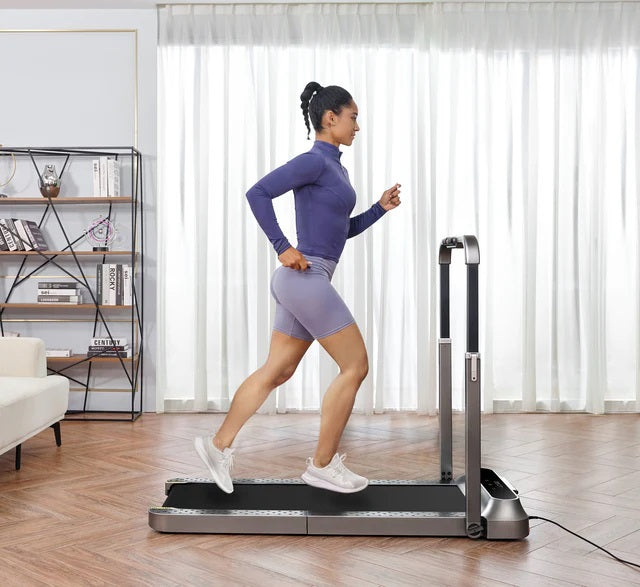
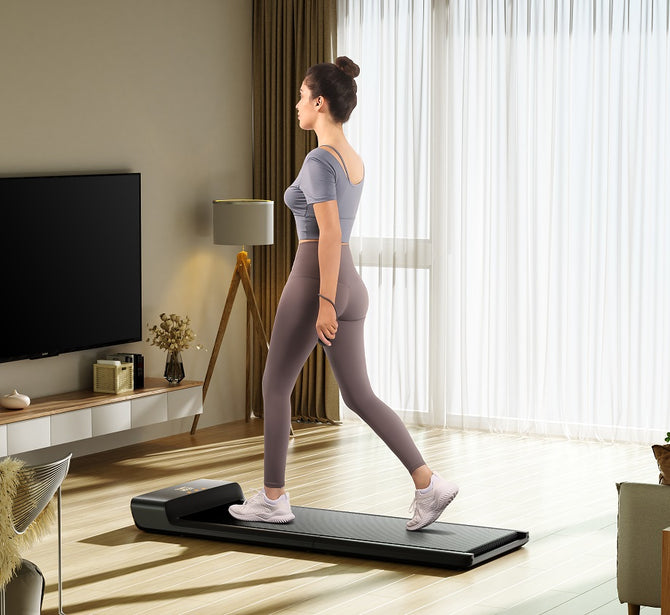
One of the most practical ways to offer company fitness in the workplace is with a compact treadmill in the office. A treadmill for under the desk fits precisely in this strategy: employees can walk on it during work, without having to rearrange their schedule for a gym. And because the treadmill is located in the workplace, it falls under the nil valuation. Zero tax, no claim on the discretionary scope.
Why a treadmill in the workplace is smart
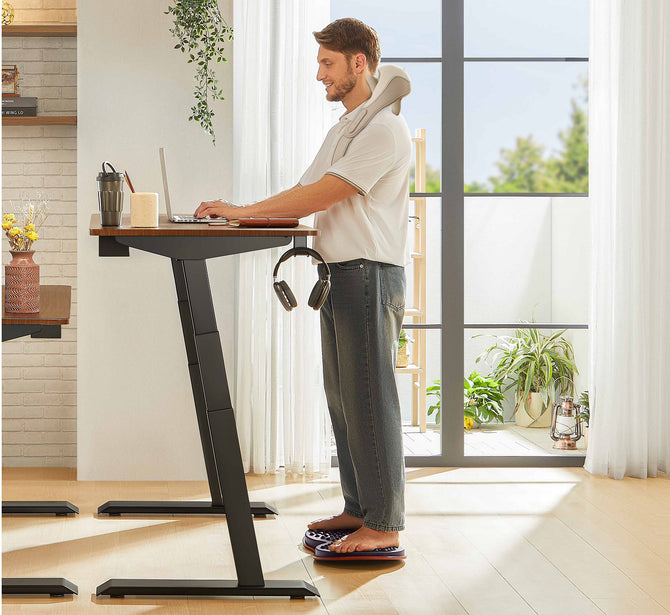
The average office employee sits about eight hours a day. That affects concentration, energy level and in the long term health. A treadmill in the office makes it possible to stay in motion during meetings, phone calls or regular desk work. Our experience teaches that employees who regularly walk during work feel more energetic and are more productive after the workday. It's accessible (no sports clothing needed, no shower, no extra travel time) and it just fits in a normal workday.
A frequently asked question is whether a treadmill doesn't make too much noise for a shared workspace. Our treadmills have a noise level of maximum 65 dB(A) in walking mode, which is comparable to a normal conversation. In practice colleagues hardly notice it.
Compact treadmills that fit in every office
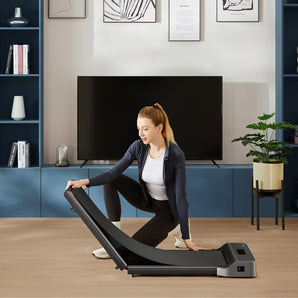
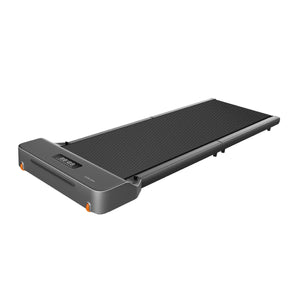
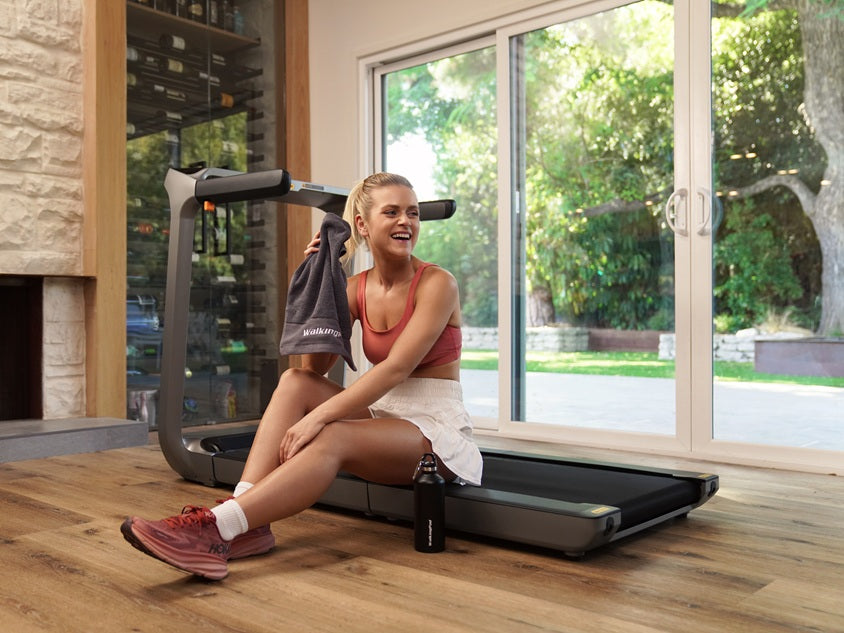
"But we don't have space for fitness equipment" is an objection we often hear. Our foldable treadmills are precisely designed for that. With KingSmith's patented folding technology (187 core patents) you save up to 90% in storage space. After use you fold the treadmill and slide it under a desk or in a closet. From a small home office to an office floor with twenty desks: there's always a model that fits.
Do you want to try it first before making a choice? At WalkingPad you can test every treadmill free for 30 days. This way you discover without risk which model works best for your office and team. And because we ship everything from our warehouse in Barneveld, you already have the treadmill at home the next working day.
What does company fitness yield for employer and employee?
Company fitness may sound like a nice extra, but the impact is more concrete than you think. For you as employer it can contribute to lower sick leave and higher productivity. Employees who move regularly report sick less often and generally perform better on mentally demanding work. In a tight labor market a good vitality arrangement also helps in finding and retaining good people.
For employees the benefit is directly noticeable. With the cafeteria model the discount on a sports subscription can increase to 40% or more. If you as employer choose fitness equipment in the workplace, employees benefit without extra costs or time investment: they move more during the workday, without having to plan or travel. Do you want to convince your employer as employee to offer company fitness? Then point out the fiscal advantages via the WKR, the positive effects on health and productivity, and on the fact that a treadmill in the office falls under the nil valuation and therefore costs not a cent extra.
Good to know: the above arrangements also apply to director-major shareholders (DGA's). If you as DGA make fitness equipment available in the workplace that staff also uses, that also falls under the nil valuation. In addition, the Tax Authority maintains a practicality limit of 2,400 euros per employee per year. If you stay below this with your designated allowances and provisions, the tax authority generally considers this customary and no action is taken. This limit is incidentally not a legal standard, but a policy from the Tax Authority.
Invest in the health of your team
Company fitness via the work-related costs scheme is an accessible way to strengthen the health and work pleasure of your employees, while you as employer maintain fiscal advantage. Especially with a compact treadmill in the office you make movement on the work floor simple and completely untaxed. At WalkingPad we're happy to help you find the right treadmill for your office. View our range of desk treadmills or contact our customer service for personal advice.
Note: this article is informative in nature and doesn't replace fiscal or legal advice. WKR rules can differ per situation and per year. Always consult a tax specialist or the Tax Authority for advice that matches your organization.