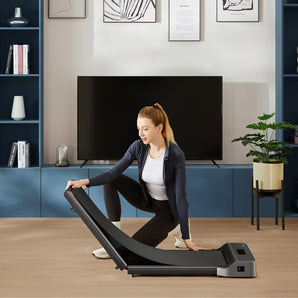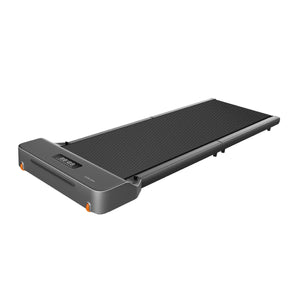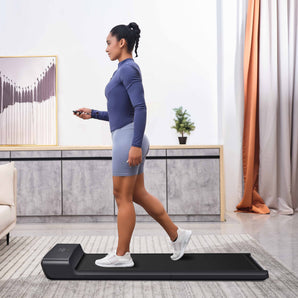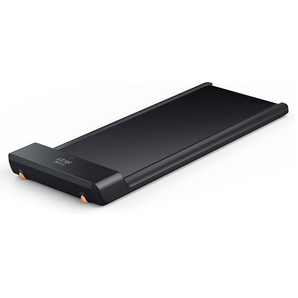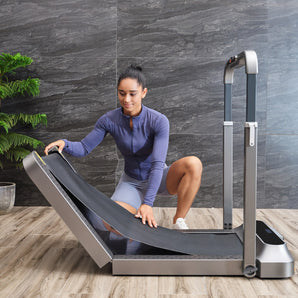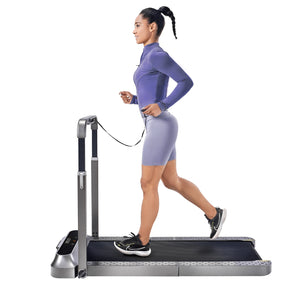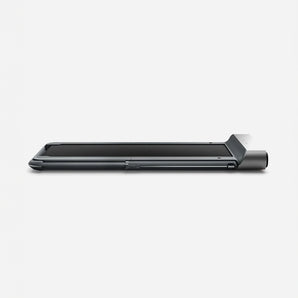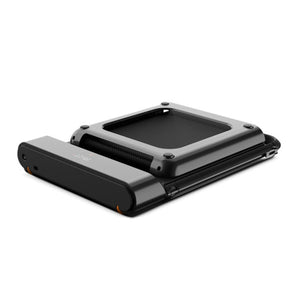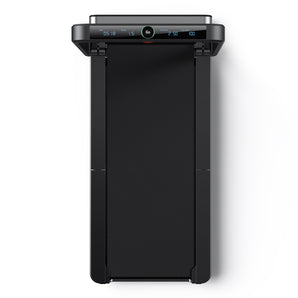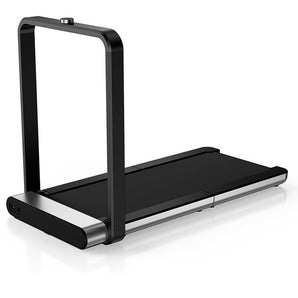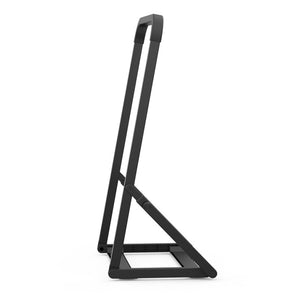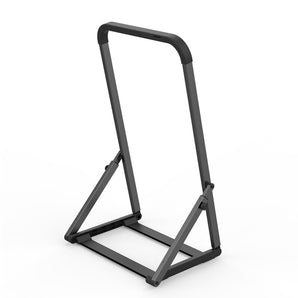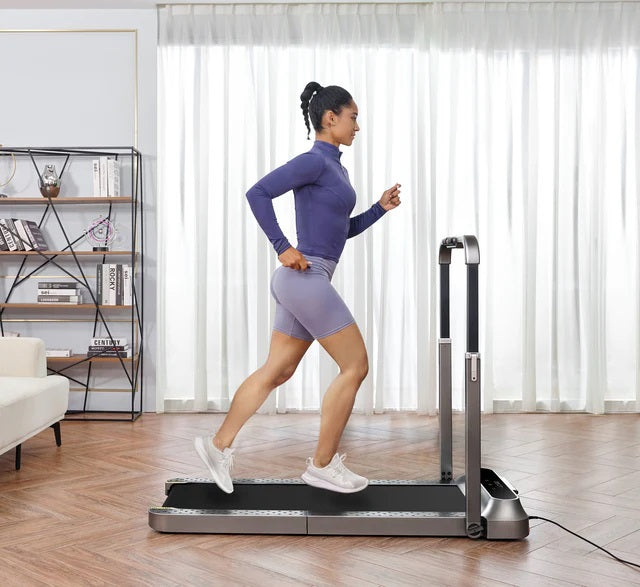
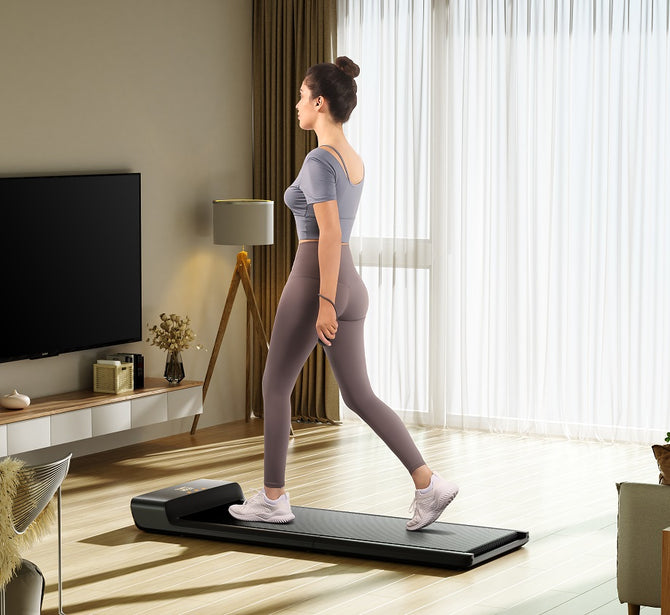


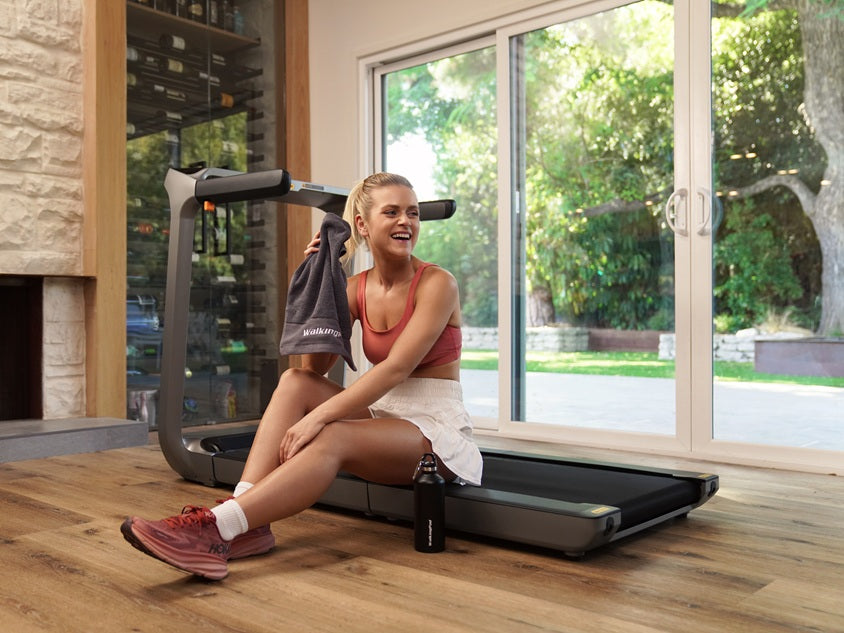

A treadmill works as follows: an electric motor makes the walking surface, a closed rubber belt, rotate over a sturdy deck while you walk or run. You control your pace via the console and can optionally walk at an incline or use a specific program. A foldable treadmill simply folds away after your training so it takes up little space.
How a treadmill works
The electric motor drives the front roller and that roller pulls the walking surface in a continuous loop over the deck. The rear roller keeps the belt taut and in place.
While the belt moves backwards, you take steps forward, which keeps you walking in the same place. If you request a higher pace via the console, the motor drives the rollers faster and the belt runs faster. This way you determine exactly how fast the belt runs under your feet.
Which settings and options does a treadmill have?
A treadmill typically has three types of settings: the speed, the incline and various training programs. Together they determine how heavy and how varied your training becomes.
On simple walking pads you operate everything with a few buttons or a remote control, while more extensive models also offer an app and extra functions. Each setting has its own function, which we go through one by one below.
How to set the speed
You set the speed via the console or a remote control, usually in steps of 0.1 or 0.5 km/h. The motor translates your choice into the rotation speed of the rollers, making the belt run faster or slower.
The range differs per type: our walking pads run calmly up to 6 km/h, while our running treadmills can handle speeds up to 18 km/h. This way you choose a pace that suits walking, jogging or brisk running.
Setting an incline
You set the incline with a separate motor that lifts the front of the deck slightly upwards. This makes you walk uphill as it were, which puts extra load on your muscles and fitness, without having to run faster.
Not every treadmill has this function: many compact models are deliberately built flat to keep them light and foldable. If you want to train specifically with resistance, check whether a model has an adjustable incline.
Training programs and functions
Training programs are preset schedules that automatically alternate the speed, and sometimes the incline, during your training. This way you don't have to adjust anything yourself and simply follow the pace the program indicates.
Many treadmills also connect to an app, such as our KS Fit app, the companion app with which you plan training sessions and track results. Some models have FootSense technology, where sensors in the walking surface automatically adjust your speed to your position on the belt.
Which components does a treadmill consist of?
A treadmill consists of a handful of core components that together make the movement possible: the motor, the walking surface, the rollers, the deck, the frame and the console. The motor is the drive and usually sits under the front, hidden behind a cover.
The walking surface is the rubber belt you walk on, which rotates around the front and rear roller. Below that lies the deck, a sturdy plate that absorbs the impact of every footstep with a cushioning system.
Many of our models have multi-layer shock absorption there, a 4-layer cushioning system that helps protect your joints. The frame holds everything in place and the console is your control panel.
How does a WalkingPad treadmill work?
A WalkingPad treadmill works according to the same principle as any other treadmill. You get a clear manual with every model. In that user guide you read step by step how to assemble the treadmill, operate the settings and perform maintenance.
This way you know from day one how your device works, whichever model you choose. If you're unsure which treadmill fits your space and pace, take your time to view our range and compare the options.