

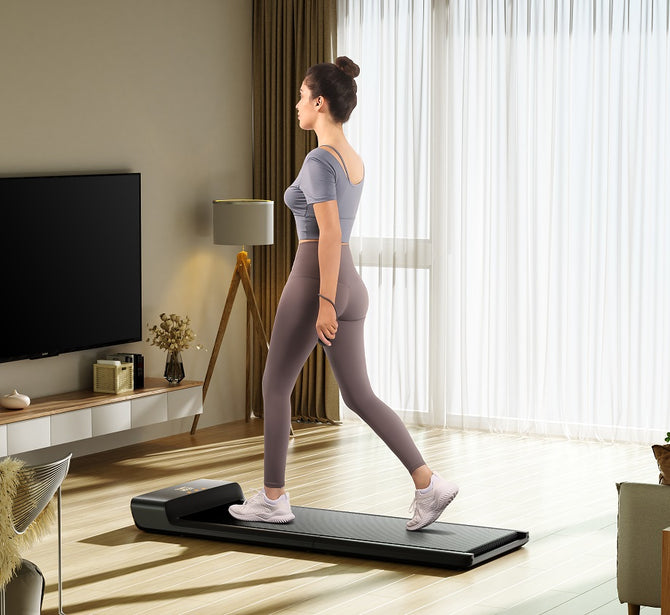






Walking is one of the easiest ways to burn more calories. But how many calories do you actually burn while walking? At a brisk pace of 5 km/h (3.1 mph), you burn roughly 230 to 340 calories per hour, depending on your body weight. In this article, we break it down per kilometer, per duration, and for 10,000 steps, so you know exactly what walking gives you
How does calorie burning from walking work?
Your body continuously uses energy, even at rest. Once you start moving, that energy use increases. The more intense the activity, the more kilocalories (kcal) your body requires. Walking is considered a low-impact exercise: it’s easy on the joints, can be sustained for a long time, and promotes fat burning without putting heavy strain on your body.
What is the MET value?
The most commonly used method to estimate calorie burn is the MET value. MET stands for Metabolic Equivalent of Task. It indicates how much energy an activity costs compared to sitting still. Sitting has a MET value of 1. Walking scores higher because your body works harder than at rest. According to the Compendium of Physical Activities (2024), the international scientific standard for measuring energy expenditure during activity, the following MET values apply for walking on flat ground:
- Leisurely walking (4–5 km/h / 2.5–3.1 mph): MET 3.0–3.5
- Brisk walking (5–5.5 km/h / 3.1–3.4 mph): MET 3.8
- Fast walking (6–7 km/h / 3.7–4.3 mph): MET 4.8–5.5
The formula is simple:
MET × body weight in kg × hours = estimated calorie burn
For example, if you weigh 75 kg (165 lbs) and walk briskly at 5 km/h for one hour:
3.8 × 75 × 1 = approximately 285 kcal.
Factors that affect calorie burn
The MET formula is a good guideline, but not an exact science. Your body weight is the biggest factor: the more you weigh, the more energy you burn to maintain the same pace. Your walking speed also matters—walking a bit faster immediately increases calorie burn because MET values rise sharply with speed.
Body composition plays a role too. Someone with more muscle mass has a higher resting metabolism and burns more calories during walking than someone with more fat at the same weight. Age and sex also influence metabolism: it slows as you get older. Finally, the terrain matters. Walking on sand or hilly trails requires more energy than flat asphalt, and a treadmill feels slightly different from walking outside. All figures in this article are therefore approximate, not exact.
How many calories do you burn per kilometer of walking?
Many people want to know their calorie burn per kilometer. Below is an overview based on brisk walking at 5 km/h (MET 3.8), calculated for three weight classes. This table provides an estimate; your actual burn may vary.
|
Distance |
60 kg |
75 kg |
90 kg |
|
1 km |
46 kcal |
57 kcal |
68 kcal |
|
2 km |
91 kcal |
114 kcal |
137 kcal |
|
4 km |
182 kcal |
228 kcal |
274 kcal |
|
5 km |
228 kcal |
285 kcal |
342 kcal |
|
8 km |
365 kcal |
456 kcal |
547 kcal |
|
10 km |
456 kcal |
570 kcal |
684 kcal |
|
12 km |
547 kcal |
684 kcal |
821 kcal |
|
15 km |
684 kcal |
855 kcal |
1.026 kcal |
|
20 km |
912 kcal |
1.140 kcal |
1.368 kcal |
Walking 5 km burns about 285 kcal for someone weighing 75 kg (165 lbs)—roughly equivalent to a hearty sandwich with cheese and a glass of milk. At 10 km, you burn around 570 kcal, similar to a full meal. Note: the table assumes a constant pace on flat ground. Walking on hills or sand can increase energy expenditure by 10–30%.
How many calories do you burn per minute of walking?
Not everyone measures walking by kilometers. Want to know how many calories you burn in 30, 45, or 60 minutes? The table below shows estimates based on brisk walking at 5 km/h (MET 3.8).
|
Duration |
60 kg |
75 kg |
90 kg |
|
20 min |
76 kcal |
95 kcal |
114 kcal |
|
30 min |
114 kcal |
143 kcal |
171 kcal |
|
45 min |
171 kcal |
214 kcal |
257 kcal |
|
1 hour |
228 kcal |
285 kcal |
342 kcal |
|
1,5 hours |
342 kcal |
428 kcal |
513 kcal |
|
2 hours |
456 kcal |
570 kcal |
684 kcal |
A half-hour of brisk walking burns 115–170 kcal. Do this five times a week, and you’ll burn 570–855 extra calories weekly—enough to create a meaningful annual calorie deficit. Walking for 2 hours burns around 570 kcal for someone weighing 75 kg, nearly equivalent to an hour of jogging. Walking is also easier to fit into your daily routine; home workers can use a treadmill under the desk without taking extra time.
Do you burn more calories with 10,000 steps?
The famous 10,000 steps per day: how many calories does it actually burn? With an average stride, 10,000 steps equals about 7–8 km (4.3–5 miles). Brisk walking at 75 kg burns around 400–455 kcal.
That’s a substantial contribution to your daily energy expenditure. Still, 10,000 steps isn’t a scientific benchmark—it originated from a Japanese marketing campaign in the 1960s. More recent research shows that even 7,000–8,000 steps a day provide significant health benefits. What matters is regular movement and creating a calorie deficit if you want to lose weight. Whether you walk on a treadmill or outdoors, it doesn’t make much difference for calorie burn.
Walking vs. running: which burns more calories?
Running burns more calories per hour than walking. At a slow jogging pace of 8 km/h (5 mph), running has a MET of about 8.3. Brisk walking at 5 km/h has a MET of 3.8. For someone weighing 75 kg, that’s roughly 623 kcal per hour for running versus 285 kcal for walking—more than double.
But there’s nuance. Walking is gentler on the joints, and most people can sustain it longer than running. Two hours of walking burns about 570 kcal—almost as much as an hour of running. At lower intensity, your body also burns proportionally more fat than carbohydrates. Daily walking at a moderate to brisk pace can be surprisingly effective for weight loss.
What about cycling? Cycling at a moderate pace (15–20 km/h, MET 4.0–6.8) is similar to brisk to fast walking but puts less strain on your knees. The best choice depends on your preferences and physical capabilities. For specific training tips, see our treadmill running guide.
Tips to burn more calories while walking
Want to maximize your walking workouts? A few tweaks can boost calorie burn without feeling like intense training.
- Step up the pace. Moving from 4 km/h (MET 3.5) to 6 km/h (MET 4.8) increases calorie burn by nearly 40%. No running required—just pick up the pace a bit.
- Choose hilly routes. Walking uphill requires more energy than flat terrain. No hills nearby? An inclined treadmill simulates the effect at home.
- Walk regularly. Short, frequent walks three to five times a week keep metabolism active and provide better long-term results than occasional long walks. Our clients often report that daily fixed walks, e.g., during lunch or while on calls, are easiest to maintain.
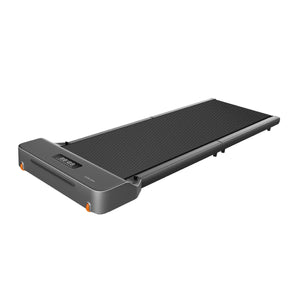
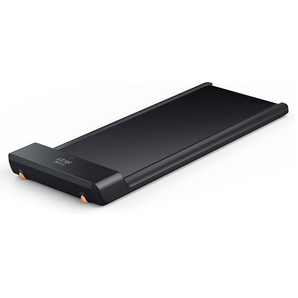
- Move at home. If you want to increase activity without extra time, consider compact treadmills: quiet, foldable, and storable within a minute.